How to Choose the Right Cell Lines for Your Research Needs?
Choosing the right cell lines for research is critical. Renowned cell biology expert Dr. Jane Smith once said, "Cell lines are not just tools; they are living systems that demand careful selection." This highlights the importance of thoughtful consideration in selecting cell lines.
Researchers face unique challenges when it comes to cell lines. Each line has its advantages and limitations. Some lines may not accurately represent the biological systems they aim to study. This leads to results that can be misleading. In addition, the characteristics of cell lines can change over time, which complicates experiments.
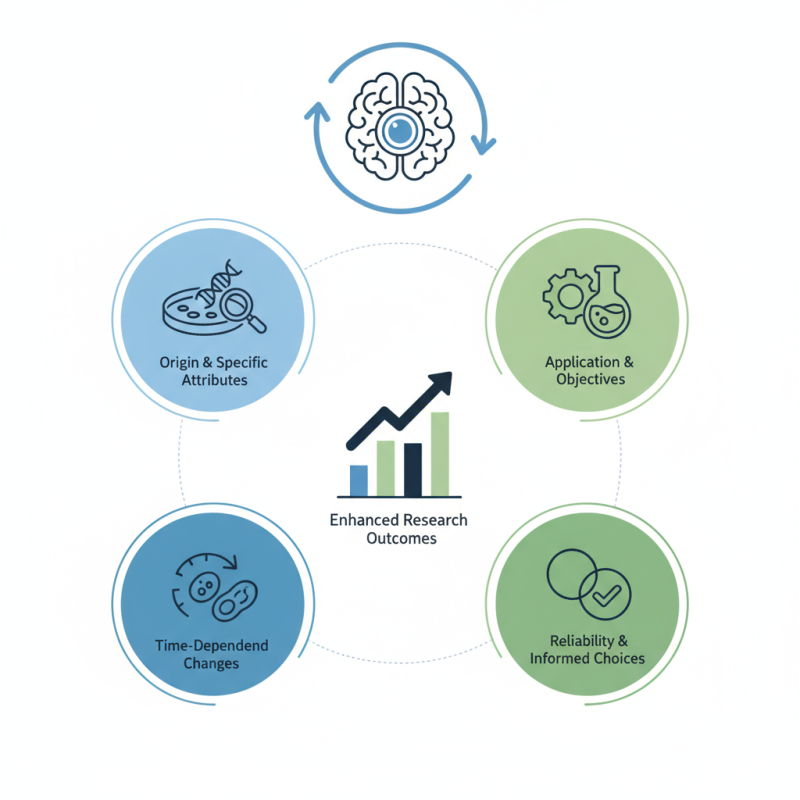
The selection process should focus on several factors. Consider the origin of the cell line and its specific attributes. The application plays a significant role in this decision. Researchers must evaluate whether the chosen cell lines align with their objectives. Ultimately, making informed choices can enhance the reliability of research outcomes.
Understanding the Importance of Cell Lines in Research
Cell lines are fundamental in biological research. They provide a controlled environment to study cellular processes. Choosing the appropriate cell line is crucial. It can greatly influence experiments and outcomes. Researchers often face the challenge of selecting the right model. This decision may impact data interpretation and validity.
Different cell lines possess unique characteristics. They can originate from various tissues and species. Some may have specific growth requirements or genetic backgrounds. Researchers should consider the relevance of the cell line to their study. A mismatch could lead to misleading results. Moreover, not all cell lines are well-documented or understood. This gap in knowledge requires careful reflection.
In some cases, researchers might overlook how a cell line behaves under certain conditions. For instance, do they respond to treatments appropriately? Are they stable over time? These questions are vital for accurate research. A deep understanding of the chosen cell line can enhance the quality of findings. Ultimately, the relevance and reliability of cell lines are essential for advancing scientific knowledge.
Cell Lines Usage in Research
This bar chart represents the utilization of various cell lines in research studies. HeLa cells are the most commonly used, followed by MCF-7 and A549. Understanding the distribution of these cell lines can guide researchers in selecting the appropriate models for their experiments.
Identifying the Specific Research Goals for Cell Line Selection
When selecting cell lines for research, clearly defining your research goals is crucial. Are you studying cancer biology, drug responses, or gene expression? Each category requires different cell lines for accurate results.
For example, a 2021 report indicated that nearly 80% of cancer studies utilize human-derived cell lines. This shows a significant trend toward more representative models.
Consider the characteristics of your target cell line. Not all lines are equal. Some exhibit unique genetic profiles while others mimic specific tissue types.
A 2019 study emphasized that choosing the wrong line could lead to misinterpretation of results. It was reported that cell lines that undergo frequent passaging may acquire mutations. This could skew your findings and further complicate your research.
Another aspect to ponder is the availability of resources. Some cell lines may require specialized culture conditions or reagents. Are you prepared for this?
Accessibility can dictate the feasibility of your project. Additionally, a significant portion of researchers may not have access to the latest cell lines, which can limit innovation. This gap highlights the need for continuous evaluation and adaptation in your research strategy.
Evaluating Commonly Used Cell Lines and Their Characteristics
Choosing the right cell lines is crucial for successful research. Many researchers frequently select from commonly used options, but not all are suitable for every study.
Characterizing different cell lines helps in identifying the most appropriate ones. For instance, A549 and HeLa cells are popular for cancer research. They each come with distinct growth patterns and response to treatments.
A recent report by the National Center for Biotechnology Information (NCBI) highlighted that over 50% of scientists find difficulties in replicating studies. This often stems from choosing inappropriate cell lines that do not accurately represent the tumor types being studied. It's essential to understand the limitations of your chosen cell lines. The environment and genetic background can significantly impact experimental outcomes.
Tip: Always check the latest publications related to your research area. They often discuss the benefits and drawbacks of different cell types. Additionally, involve experts who can provide insights into specific characteristics relevant to your studies.
Not every widely-used cell line will yield the expected results. Some may lead to false conclusions due to their unique traits. Caution is necessary. Focus on reproducibility and experimental relevance. Analyze how well the cell line models the biological processes in question. It’s worth spending extra time on this evaluation to avoid costly mistakes later.
Techniques for Validating the Performance of Selected Cell Lines
When selecting cell lines, validating their performance is crucial. Researchers often make assumptions about the characteristics of these lines, but testing is essential. Techniques such as morphological assessment and growth rate measurement can provide insights. A consistent appearance and growth pattern indicate reliability.
Tips: Regularly check for contamination. It affects results. Verify the source and ensure proper storage conditions. Something as simple as a temperature fluctuation can influence cellular behavior.
Functional assays are another way to validate your cell lines. These tests measure responsiveness to treatments or stimuli. For example, examining gene expression changes can confirm that a cell line behaves as expected. Documentation of results is vital. Errors can occur in interpretation if data is not well recorded or understood.
Tips: Keep a detailed log of each test. If results vary, consider revisiting your methodology. Reflection on unexpected outcomes is often the pathway to improvement. Understanding that not all assumptions hold true can lead to better research practices.