
China Top 10 Expression Systems Manufacturers?
China’s biotechnology sector has become an important supplier of expression systems for research, diagnostics, vaccines, and biopharmaceutical manufacturing. However, identifying the “top 10” manufacturers requires more than checking company size or website visibility. It requires evidence.
This overview examines Chinese manufacturers through practical criteria, including platform capability, product consistency, technical support, manufacturing capacity, quality documentation, and customer experience. The review considers systems based on bacterial, yeast, insect, mammalian, and cell-free platforms. These differences matter. A microbial system may support fast protein production, while a mammalian platform often offers more suitable folding and glycosylation.
Professor Florian Wurm, a respected CHO-cell bioprocessing expert, has described CHO cells as “the workhorse of the biopharmaceutical industry.” His observation remains relevant when evaluating expression systems for complex therapeutic proteins. Yet CHO technology is not automatically the best choice. Application, scale, budget, and regulatory expectations can change the decision.
Details reveal capability. Can a manufacturer provide stable cell lines, validated protocols, and batch records? Can its technical team explain an unclear chromatogram without hiding behind marketing language? These questions deserve attention.
Not every company publishes comparable data. Some claims may be difficult to verify. That is a limitation of this ranking.
The selected manufacturers are therefore presented as practical candidates, not unquestionable winners. Their strengths may differ across research use, process development, and commercial production. Readers should confirm current certifications, facility status, product specifications, and independent performance data before making a purchasing decision. A polished brochure is useful. Reproducible results are better.
Definition and Role of Expression Systems in Biomanufacturing
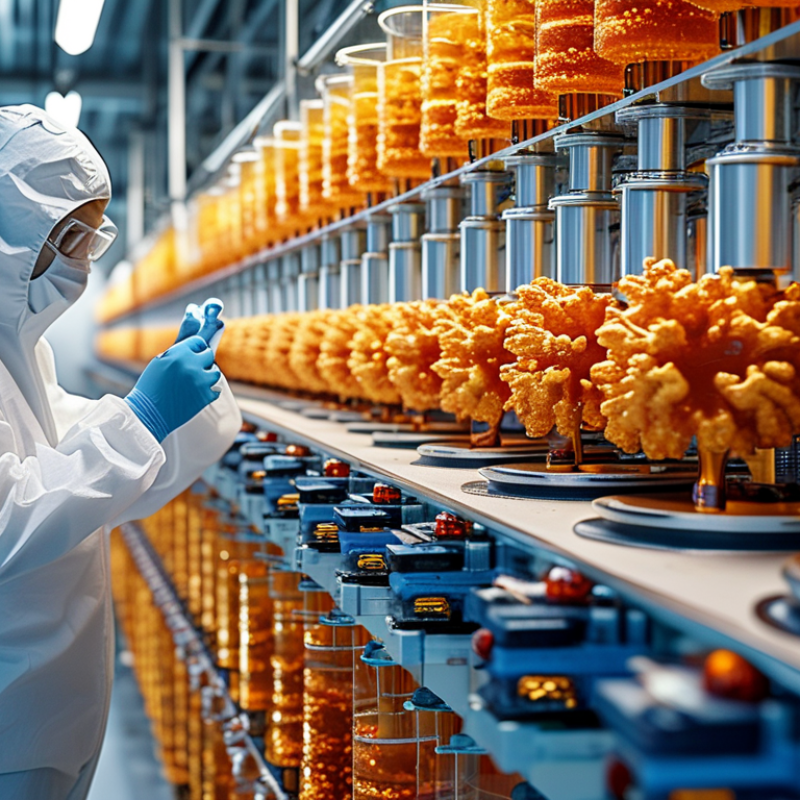
Expression systems are the biological engines of biomanufacturing. They use host cells or organisms to produce proteins, vaccines, enzymes, and other therapeutic materials. Common platforms include mammalian cells, microbial cells, yeast, insect cells, and cell-free systems. Each platform shapes product quality, production speed, cost, and scalability.
The host is not a minor technical choice. Mammalian cells can provide complex folding and human-like glycosylation, but they often grow slowly and require careful process control. Microbial systems usually offer faster growth and lower media costs. However, they may struggle with complicated proteins. BioPlan Associates’ 2024 biomanufacturing survey continues to identify mammalian platforms as central to commercial biologics production, while also reporting strong interest in microbial and alternative systems. The trade-off remains real.
Expression systems also influence facility design. A high-yield clone still needs stable culture conditions, reliable feeding, and purification compatibility. The 2023 Global Biopharmaceutical Manufacturing Capacity and Production Survey reported continuing pressure on capacity, efficiency, and manufacturing flexibility. That pressure makes platform selection more practical than theoretical. Teams compare yield per liter, batch duration, genetic stability, and regulatory history. They should also examine recovery after scale-up. Small-flask results can mislead.
No system is universally superior. Some evaluation reports simplify this point. In practice, a lower-yield platform may win when it produces a safer, more consistent molecule. Experienced manufacturers therefore assess the complete workflow, not expression alone. This is where credible system manufacturers matter: their value depends on documented performance, technical support, and reproducible data. Industry rankings can guide research, but they should not replace process evidence.
Criteria for Selecting China’s Leading Expression System Manufacturers
China Top 10 Expression Systems Manufacturers?
Selecting a leading Chinese expression system manufacturer requires more than comparing production capacity. Technical experience should match the project’s host, protein type, and intended scale. A capable supplier can explain why a bacterial, yeast, insect, or mammalian platform fits the target. Clear reasoning matters.
Review documented evidence, not attractive claims. Check quality controls, batch records, analytical methods, and traceability from cell bank to final material. Ask for realistic timelines, recovery rates, and examples of difficult proteins handled successfully. Facility standards, trained staff, and equipment maintenance also reveal operational reliability. An experienced manufacturer should discuss risks openly, including aggregation, low expression, or unstable constructs. No supplier is perfect. That honesty can be more valuable than impressive promises. Regulatory awareness and secure data handling should also be confirmed before technical discussions begin.
Tips: Request a sample project plan with milestones, testing methods, responsibilities, and approval points. Compare how quickly each team answers technical questions. Ask whether process changes require documented review. Visit the facility when practical, or request a structured virtual audit. A low quotation may hide limited optimization or weak post-project support. One detail is easy to miss: confirm who owns the data, materials, and revised protocols. This small clause can prevent major confusion later. Metrics should remain measurable, not vague. “High quality” needs evidence.
Profiles of China’s Top 10 Expression System Manufacturers
China’s top ten expression system manufacturers reflect a broad and increasingly mature biomanufacturing landscape. Their portfolios generally cover bacterial, yeast, insect-cell, mammalian-cell, and cell-free platforms. Several focus on rapid research-scale protein production, while others provide stable cell lines, plasmid design, transfection reagents, and process development. This range matters because recombinant proteins differ sharply in folding, glycosylation, secretion, and purification requirements.
The global protein expression market was valued at about USD 2.3 billion in 2023, with Grand View Research projecting strong growth through 2030. China’s manufacturers are responding with larger fermentation vessels, improved media screening, and more documented quality controls. The strongest profiles usually show measurable data: expression yield, batch consistency, endotoxin performance, recovery rate, and delivery time. BioPlan Associates’ 2024 bioprocessing report also highlights persistent industry pressure to reduce costs and improve process scalability. That pressure is visible in China.
Not every supplier performs equally well across all systems. Some are excellent for milligram-scale screening but less prepared for regulated production. Others offer attractive technical support, yet publish limited comparative data. That is a weakness worth noting. A careful buyer should request application records, validation methods, raw performance data, and a clear change-control process. In practice, the best manufacturer is not always the largest one. It is the supplier whose platform fits the protein, timeline, and required quality standard.
Comparison of Technologies, Products, and Manufacturing Capabilities
China’s leading ten expression-system manufacturers differ in technology depth, product focus, and production scale. A useful comparison begins with host selection. Bacterial systems often provide fast growth, lower costs, and strong enzyme output. Yeast platforms can improve secretion and simplify fermentation. Insect and mammalian cells usually support more complex proteins, including antibodies and glycoproteins, but require longer development cycles and tighter environmental control.
Technology is only one part of capability. Buyers should examine strain or cell-line development, plasmid design, upstream processing, purification, and analytical testing. Some manufacturers offer ready-to-use expression kits, media, vectors, and recombinant proteins. Others provide custom development from gene synthesis through pilot production. Check the evidence. Batch records, sterility procedures, endotoxin testing, stability data, and change-control systems reveal more than a product catalogue.
Manufacturing scale also separates suppliers. A reliable facility should show controlled seed trains, monitored bioreactors, validated cleaning, and traceable cold-chain handling. Small-scale output may look impressive, yet scale-up can expose oxygen-transfer or aggregation problems. This is often overlooked. Independent audits and clear technical documentation strengthen confidence, especially for regulated research and commercial development. Still, no supplier is perfect. Delivery times, data presentation, and technical support may vary between projects. A careful comparison should score measurable performance, not polished claims.
| Rank | Anonymous Manufacturer Profile | Primary Expression Platforms | Typical Product Applications | Development & Optimization | Upstream Manufacturing Capability | Typical Scale Range | Downstream Processing | Quality & Regulatory Capability | Key Technical Strength | Best-Fit Customer Need |
|---|---|---|---|---|---|---|---|---|---|---|
| 1 | Manufacturer Profile 01 | CHO E. coli Yeast | Monoclonal antibodies, recombinant proteins, enzymes and biosimilar intermediates | Cell-line development, vector design, clone screening and process optimization | GMP and non-GMP single-use bioreactor operations | 2 L–2,000 L | Chromatography, viral clearance, UF/DF and sterile filtration | High Documented quality systems and phase-appropriate GMP support |
Integrated mammalian and microbial development services | Programs requiring an end-to-end path from gene sequence to clinical material |
| 2 | Manufacturer Profile 02 | E. coli Yeast CHO | Industrial enzymes, research proteins, cytokines, antigens and diagnostic reagents | Codon optimization, secretion screening, fermentation development and assay testing | Microbial fermentation with pilot and commercial production support | 5 L–5,000 L | Cell removal, capture chromatography, concentration and formulation | High Suitable for regulated laboratory and manufacturing workflows |
High-density microbial fermentation and cost-efficient recovery | High-volume enzymes and recombinant proteins requiring competitive unit economics |
| 3 | Manufacturer Profile 03 | CHO HEK293 Insect cells | Antibodies, viral vectors, vaccine antigens and complex glycoproteins | Transient expression, stable pool generation and analytical characterization | Suspension-cell culture using single-use manufacturing trains | 5 L–1,000 L | Clarification, affinity capture, polishing, virus filtration and UF/DF | High Strong support for comparability and process characterization |
Complex protein expression and glycosylation-sensitive products | Biologics requiring flexible mammalian or viral-vector workflows |
| 4 | Manufacturer Profile 04 | E. coli Yeast | API enzymes, food-grade proteins, diagnostic antigens and laboratory reagents | Strain construction, promoter selection, fed-batch optimization and scale-up studies | Stainless-steel and single-use microbial fermentation platforms | 10 L–10,000 L | Harvest clarification, membrane separation, chromatography and drying | Medium–High Quality systems vary by intended application |
Large-scale microbial production and robust fermentation control | Industrial, diagnostic and research products with high-volume demand |
| 5 | Manufacturer Profile 05 | CHO HEK293 | Monoclonal antibodies, Fc-fusion proteins and recombinant therapeutic proteins | Stable cell-line development, clone selection, stability studies and process transfer | Clinical-scale mammalian culture with segregated production suites | 2 L–500 L | Protein A or affinity capture, ion exchange, viral filtration and UF/DF | High Focused on clinical development and technology transfer |
Rapid mammalian cell-line development and scale-up readiness | Early clinical programs needing speed, flexibility and moderate batch sizes |
| 6 | Manufacturer Profile 06 | Baculovirus–insect cell CHO | Vaccine antigens, virus-like particles, structural proteins and research biologics | Virus-bank preparation, infection-condition optimization and expression screening | Insect-cell suspension culture and virus-based production processes | 5 L–2,000 L | Clarification, nuclease treatment, chromatography and tangential-flow filtration | Medium–High Suitable for research, preclinical and selected GMP projects |
Efficient production of multimeric proteins and particle-based antigens | Vaccine and VLP projects where insect-cell productivity is advantageous |
| 7 | Manufacturer Profile 07 | Yeast E. coli Pichia pastoris | Enzymes, vaccine antigens, biosimilars and non-glycosylated proteins | Secretion engineering, methanol or glucose-fed processes and fermentation modeling | GMP-capable microbial production with pilot-scale process development | 5 L–3,000 L | Cell disruption or broth clarification, chromatography, UF/DF and drying | Medium–High Strong process documentation for microbial products |
Secreted-protein production and high-cell-density fermentation | Products that benefit from simplified downstream recovery and lower media cost |
| 8 | Manufacturer Profile 08 | CHO HEK293 E. coli | Research-use proteins, clinical trial materials and diagnostic components | Small-scale parallel screening, transient expression and analytical method development | Flexible multi-product suites with modular single-use equipment | 0.5 L–200 L | Affinity purification, polishing chromatography and formulation screening | Medium Best suited to research and early development stages |
Fast turnaround and flexible small-batch manufacturing | Start-ups, academic groups and early-stage proof-of-concept programs |
| 9 | Manufacturer Profile 09 | E. coli Yeast Mammalian cells | Recombinant antigens, diagnostic proteins, enzymes and therapeutic intermediates | Sequence-to-process feasibility, scale-down modeling and tech-transfer support | Pilot and commercial manufacturing with parallel process trains | 10 L–5,000 L | Clarification, depth filtration, chromatography, UF/DF and bulk filling | Medium–High Capability depends on product class and facility |
Cross-platform technology transfer and multi-product scheduling | Customers comparing microbial and mammalian routes before scale-up |
| 10 | Manufacturer Profile 10 | CHO HEK293 Insect cells | Antibodies, recombinant receptors, gene-therapy-related proteins and vaccines | Stable and transient expression, upstream intensification and formulation studies | Single-use mammalian and insect-cell manufacturing for clinical supply | 2 L–1,000 L | Affinity capture, polishing, virus clearance, UF/DF and aseptic processing | High Designed for documentation-intensive biologics programs |
Flexible production of complex biologics and clinical batches | Programs needing diverse host systems and controlled clinical manufacturing |
Key Applications and Future Trends in China’s Expression System Market
China’s expression system market is expanding from research laboratories into industrial biomanufacturing. Local manufacturers now support bacterial, yeast, insect, mammalian, and cell-free platforms. Their products serve plasmid construction, recombinant proteins, vaccine components, diagnostic reagents, and enzyme production.
In university laboratories, bacterial systems remain popular because they grow quickly and reduce early development costs. Mammalian systems are more suitable for complex proteins requiring accurate folding and glycosylation. In practice, teams often compare three or four hosts before selecting one. Small differences in temperature, feeding, or induction timing can change yield sharply. The results are not always predictable.
Demand is also rising for flexible expression tools. Contract developers and smaller biotechnology firms need ready-to-use vectors, stable cell lines, and scalable purification workflows. China’s manufacturers are responding with modular kits, automated screening, and localized technical support. However, product quality can vary between batches. Better reference standards, transparent validation data, and stronger documentation would improve user confidence.
Future growth will likely center on high-throughput strain screening, artificial intelligence-assisted optimization, and continuous processing. Cell-free expression may gain attention where rapid prototyping matters. Sustainable production is another pressure point, especially for water use, energy consumption, and disposable materials. Yet advanced equipment alone cannot solve weak process design. Skilled operators still matter. Some market forecasts appear overly optimistic because laboratory success does not guarantee commercial stability.、】【
China Expression System Market: Key Application Suitability
The chart compares the relative technical suitability of major expression platforms for important Chinese biopharmaceutical applications. The 0–100 index is a normalized comparative score based on commonly reported host characteristics, including scalability, folding capability, production speed, and suitability for complex biologics; it is not company revenue or market share data.
Mammalian systems remain the preferred platform for monoclonal antibodies and other complex biologics, while microbial and yeast systems continue to support vaccines, enzymes, research reagents, and selected recombinant proteins. Future development is expected to focus on faster cell-line development, continuous manufacturing, automation, and improved glycoengineering.
Related Posts
-
Top 10 Expression Systems for Biotechnology Research and Application?
-

How to Choose the Right Protein Expression Systems for Your Research?
-

Why Are Host Cell Proteins Important in Bioprocessing?
-

How to Choose the Best Transfection Reagents for Your Experiments?
-

How to Optimize Gene Therapy for Global Supply Chain Success?
-

How to Detect Mycoplasma in Your Samples Effectively?