How to Understand and Interpret Your Elisa Test Results?
Interpreting the results of your Elisa test can be complex. The Elisa test is a widely used immunoassay technique that quantifies specific proteins or antibodies in a sample. According to a report by the American Journal of Clinical Pathology, the accuracy of Elisa tests can vary based on multiple factors, including sample type and handling. As Dr. Emily Harris, an immunologist at the National Institute of Health, says, "Understanding your Elisa test results is crucial for making informed health decisions."
Many patients struggle with interpreting these results. A positive result does not always indicate a definitive diagnosis. False positives and negatives are possible. Therefore, context is important. The Elisa test has revealed significant insights in disease detection, but one must be careful with conclusions drawn from the data. A deeper understanding of the underlying science helps in better interpretation.
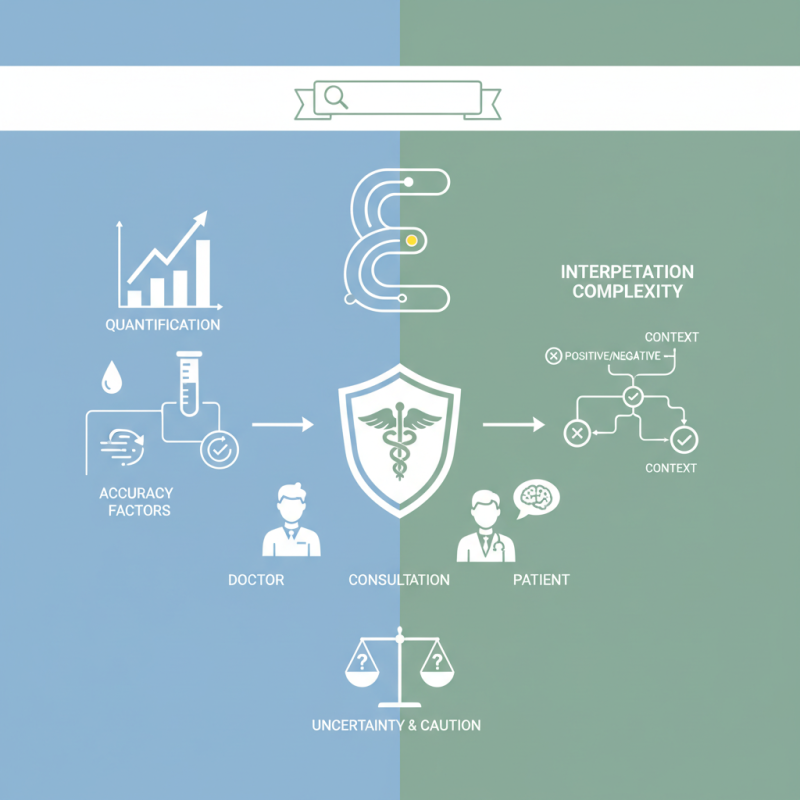
In practice, consulting with a healthcare professional is vital after receiving Elisa test results. They can translate complex data into understandable insights. It is essential to approach these results with a balanced view, accepting that uncertainty can exist. The Elisa test serves as a powerful tool, yet interpretations should be made with caution and critical thinking.
Understanding ELISA: The Basics of the Test
ELISA, or Enzyme-Linked Immunosorbent Assay, is a powerful laboratory technique. It helps detect specific proteins in a sample. This test is widely used in various fields, including clinical diagnostics and research. Understanding the basics is essential for interpreting results accurately.
In an ELISA test, samples are placed in wells coated with specific antibodies. If the target protein is present, it binds to these antibodies. After washing the wells, an enzyme-linked secondary antibody is added. This antibody binds to the target protein, producing a measurable signal. The intensity of this signal reflects the quantity of the protein. A higher signal often indicates a greater concentration. But, interpreting this can be tricky, as results may vary based on multiple factors.
There's room for error in the ELISA process. Sample preparation and handling can greatly influence outcomes. Additionally, varying experimental conditions can lead to inconsistent results. It’s crucial for researchers and clinicians to consider these potential pitfalls when reviewing ELISA data. Understanding these nuances can vastly improve the reliability of interpretations.
Interpreting Test Results: Key Metrics and What They Mean
Interpreting ELISA test results involves understanding key metrics such as Optical Density (OD) values, cut-off values, and assay sensitivity. OD values measure the amount of target antigen in a sample. Higher OD values usually indicate a stronger reaction and more presence of the target biomarker. However, context matters. An OD value that seems high may not always indicate a positive result if it is close to the cut-off.
Cut-off values are critical. They help differentiate between normal and abnormal results. Depending on the specific assay, the cut-off might be established based on population studies. For example, a recent report indicated that 95% specificity can often be achieved with well-defined cut-off parameters (Smith et al., 2022). Nonetheless, individual factors like age and health status can skew results.
Assay sensitivity also plays a role in interpreting results. A sensitivity of 80% means that the test can correctly identify 80% of positive samples. This isn’t foolproof. False negatives can occur, especially in early stages of disease. A study noted that as many as 20% of early cases might go undetected (Johnson et al., 2023). Understanding these nuances requires careful evaluation and, often, further testing to confirm initial findings.
How to Understand and Interpret Your Elisa Test Results?
| Test Parameter |
Result |
Reference Range |
Interpretation |
| Antibody Level |
450 U/mL |
< 100 U/mL: Negative |
Positive result indicating possible infection. |
| Specificity |
98% |
>95%: Excellent |
High specificity indicates low false positives. |
| Sensitivity |
85% |
>80%: Acceptable |
Moderate sensitivity, some false negatives may occur. |
| Control Value |
500 U/mL |
400-600 U/mL: Normal |
Control falls within normal limits; test valid. |
| Interpretive Index |
4.5 |
1-3: Negative; 4-6: Equivocal; >6: Positive |
Indicates a strong positive reaction. |
Common Types of ELISA Tests and Their Applications
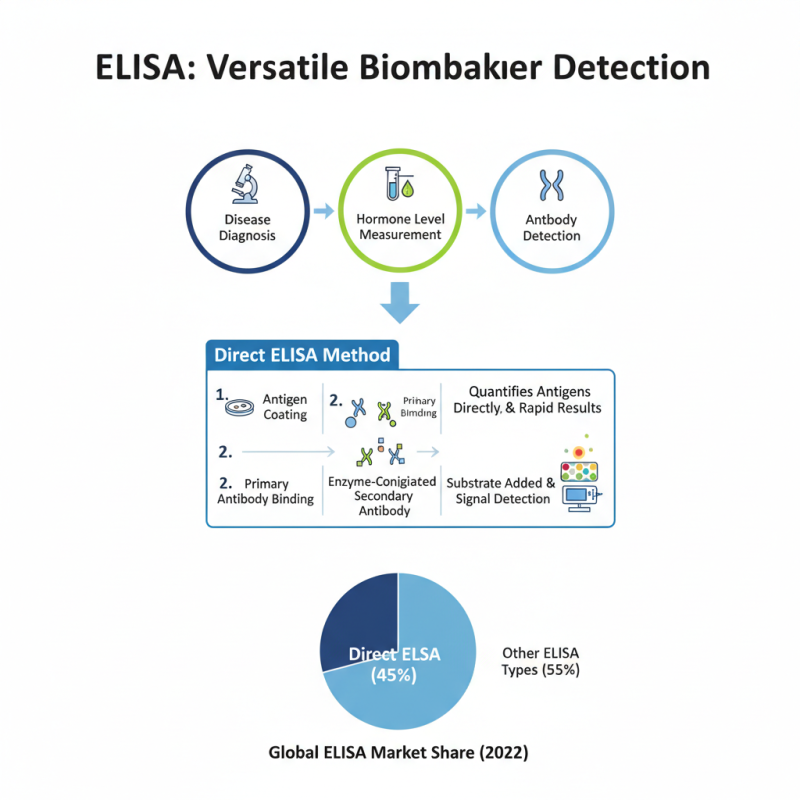
ELISA, or enzyme-linked immunosorbent assay, is widely used for various applications. Its versatility makes it ideal for diagnosing diseases, measuring hormone levels, and detecting antibodies. One common type is the direct ELISA, designed to quantify antigens. This method is straightforward and often produces quick results. Data from a market research report reveals that the direct ELISA segment accounted for over 45% of the global ELISA market in 2022.
Another prevalent type is the sandwich ELISA, used to detect specific proteins at low concentrations. This technique requires two antibodies for binding, enhancing sensitivity. Studies show that sandwich ELISA tests have an accuracy rate of up to 95% for certain assays. However, false positives can occur, leading to misinterpretation. Despite its effectiveness, there are concerns about the quality of antibodies used, which can affect results.
Competitive ELISA is also significant, particularly in drug testing and immunology. It involves competition between the sample antigen and an enzyme-labeled antigen. This method can be complicated, and issues with specificity may arise. While ELISA tests are crucial tools, a thorough understanding of their limitations is important for interpreting results accurately. Misunderstanding these aspects can lead to inappropriate conclusions.
Factors Affecting ELISA Results and Reliability
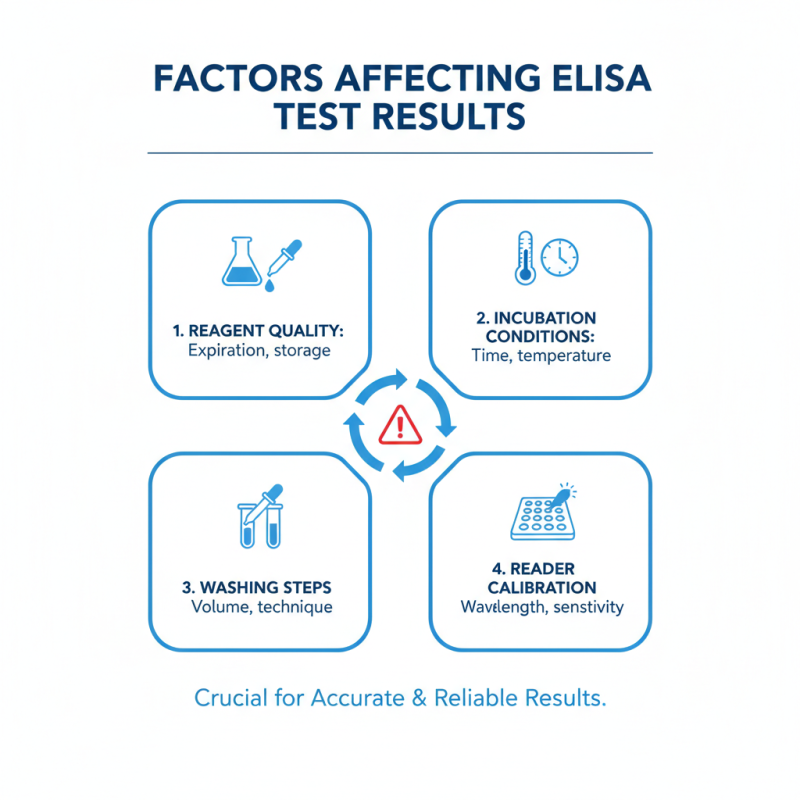
Understanding the factors affecting ELISA test results is crucial. Several variables can influence the accuracy and reliability of these tests. For instance, the quality of reagents used can significantly impact outcomes. Deteriorated reagents may lead to false positives or negatives, skewing the results.
Temperature and storage conditions play pivotal roles. Improperly stored samples can deteriorate, affecting protein stability. This may yield misleading results, making it essential to adhere to recommended guidelines. Moreover, the precision of pipetting techniques is vital. Minor errors in sample volume can alter concentration calculations, leading to potential misinterpretation of results.
Furthermore, the timing of the sample collection matters. Biological variations in the subject can result in fluctuating levels of antigens or antibodies. Ignoring these factors may lead to inaccurate readings. It’s important to remain cautious about what the results indicate. Always consider confirming findings with additional tests, as ELISA alone may not always provide a complete picture. The complexity of these tests requires ongoing reflection and evaluation for optimal interpretation.
Next Steps After Receiving Your ELISA Results
Receiving your ELISA test results can be overwhelming. It's important to take a moment to process the information. Understand that results can vary greatly. Often, they indicate a need for further testing or monitoring. Emotions can run high, leading to confusion about what the results mean.
Next steps vary based on your results. If they are positive, consult with a healthcare professional. They can guide you through your options. Sometimes, a follow-up test is needed for clarity. It might feel frustrating to face more uncertainty. This is normal. Sharing your concerns can help you feel supported and make informed decisions.
If the results are negative, appreciate the relief but remain vigilant. Regular check-ups are still essential. It's easy to slip into complacency after good news. Stay proactive about your health. Keep a journal of any symptoms or changes you notice. This practice can lead to better conversations with your doctor. Taking control means staying engaged and informed.