How to Understand Gene Therapy and Its Impact on Modern Medicine?
Gene therapy represents a frontier in modern medicine, offering the promise of targeted treatment for genetic disorders. Dr. Jennifer Doudna, a leading expert in the field, once stated, "Gene therapy is a powerful tool for rewriting the code of life." This highlights the potential that gene therapy holds for reshaping medical outcomes.
The approach involves altering genes to treat or prevent diseases. Recent breakthroughs have shown that gene therapy can effectively address conditions previously deemed incurable. However, challenges remain. The complexities of gene delivery systems and ethical concerns linger. As we navigate this rapidly evolving field, reflection on its implications is necessary.
Furthermore, understanding gene therapy requires an appreciation of its limitations. While the potential benefits are substantial, there are risks and uncertainties involved. The public perception of gene therapy can be wary, often influenced by fear of genetic manipulation. As the industry progresses, fostering open dialogue is crucial for building trust and addressing these concerns.
Overview of Gene Therapy: Definition and Historical Context
Gene therapy is a revolutionary approach in modern medicine. It involves altering genes to treat or prevent diseases. This therapy has a rich historical context. The field began in the 1970s with the first human gene therapy trial. However, the initial attempts had mixed results and raised safety concerns.
According to a report by the National Institutes of Health, over 3,000 clinical trials have investigated gene therapy by 2020. These trials cover various conditions, including genetic disorders and cancer. Despite its potential, gene therapy faces challenges. Many techniques are still in early stages. They require rigorous testing to ensure safety and effectiveness.
The most common method, using viral vectors, can cause immune responses. Patients may experience side effects. These complications highlight the need for caution. Researchers are exploring safer options, such as CRISPR technology, which shows promise. Still, ethical debates persist about gene editing. The balance between innovation and responsibility is delicate in this evolving field.
Mechanisms of Gene Therapy: How It Works at the Cellular Level
Gene therapy represents a significant shift in treating genetic disorders. At its core, it involves altering genes within a patient's cells. This can help correct mutations that cause diseases. For instance, researchers are working on therapies for conditions like cystic fibrosis and muscular dystrophy. These are daunting challenges, yet miracles occur at the cellular level.
This therapy uses various techniques. One method introduces new genes through modified viruses. The viral vectors act as delivery systems. They transport the healthy genes into cells. Once inside, these genes can produce proteins that the patient lacks. Data shows that over 100 clinical trials are currently underway for various diseases. However, challenges remain. Ensuring the safety of vectors is crucial. There are potential risks of immune reactions.
Tips: Always stay informed. Engaging with recent studies can deepen understanding. Knowledge about gene therapy helps in approaching its ethical implications. Pondering its effects on future healthcare is necessary.
Gene therapy is not without its flaws. Long-term effects are still unclear. Some patients may not respond to treatment as expected. Addressing these inconsistencies is vital for progress. Continuous research is essential for refining these groundbreaking approaches.
Impact of Gene Therapy on Disease Treatment
Applications of Gene Therapy: Diseases Targeted and Treatment Success
Gene therapy is a groundbreaking approach in modern medicine. It aims to treat diseases at their genetic roots. Various conditions are now being targeted, including certain cancers, genetic disorders, and viral infections. For instance, some successful trials focused on hemophilia, a blood clotting disorder. Patients showed improvements with fewer bleeding episodes after receiving gene therapy.
However, the journey of gene therapy has its challenges. While some treatments demonstrate remarkable success, others fall short. Not all patients experience the desired outcomes. The effects can vary significantly among individuals. This variability raises questions about the therapy's accessibility and consistency.
Moreover, ethical considerations come into play. The long-term impact of modifying genes remains uncertain. While patients have benefited from treatments, potential risks cannot be ignored. Decisions surrounding gene therapy must involve careful thought. Balancing innovation with caution is crucial for the future of healthcare.
How to Understand Gene Therapy and Its Impact on Modern Medicine?
| Disease Targeted |
Description |
Treatment Success Rate |
Year Approved |
| Cystic Fibrosis |
A genetic disorder affecting the respiratory and digestive systems caused by mutations in the CFTR gene. |
Experimental, showing up to 50% improvement in lung function. |
2021 |
| Hemophilia |
A hereditary bleeding disorder caused by deficiency in clotting factors, primarily factor VIII or IX. |
Up to 80% of patients achieving normal factor levels. |
2020 |
| Spinal Muscular Atrophy (SMA) |
A genetic disorder characterized by weakness and wasting in the skeletal muscles due to loss of motor neurons in the spinal cord. |
Up to 90% of treated children show significant motor function improvements. |
2016 |
| Leber Congenital Amaurosis |
A genetic disorder that causes severe vision loss due to retinal degeneration. |
Approximately 80% of patients experience improved vision. |
2017 |
Ethical Considerations in Gene Therapy: Risks and Regulations
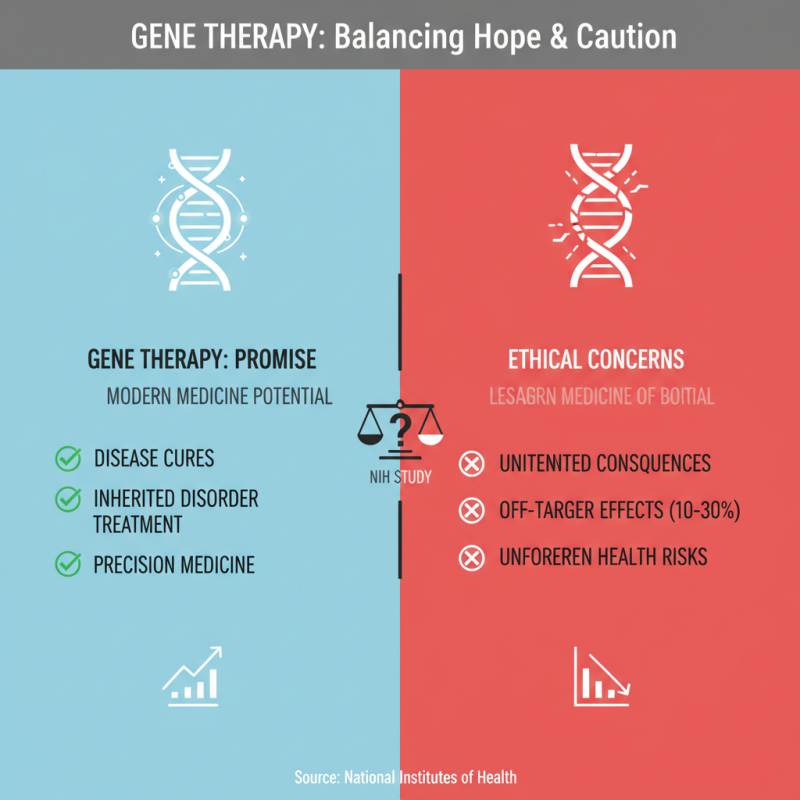
Gene therapy holds tremendous potential in modern medicine. However, it raises significant ethical concerns. The manipulation of genes can lead to unintended consequences. For instance, a study from the National Institutes of Health noted a 10-30% incidence rate of off-target effects in gene editing. These alterations can create unforeseen health risks for patients.
Informed consent is crucial but challenging to obtain. Many patients may not fully understand the complexities of gene therapy. A survey by the Pew Research Center revealed that 57% of respondents have limited knowledge about genetic manipulation. This gap highlights the need for better education, as misconceptions can lead to fear and distrust.
Regulatory frameworks also need to evolve. Current guidelines often lag behind technological advancements. The World Health Organization emphasizes that regulations must balance innovation with safety. As therapies advance, oversight is essential to ensure ethical standards are upheld. The conversation around gene therapy is ongoing, and these ethical dilemmas require thoughtful consideration.
Future Prospects of Gene Therapy: Innovations and Challenges Ahead
The future of gene therapy holds exciting potential. Researchers are exploring new techniques to edit genes more precisely. These advancements could lead to cures for genetic disorders. However, challenges remain. Ensuring safety in patients is crucial. Off-target effects risk unintended consequences. This uncertainty can deter public acceptance.
The path to innovation is not straightforward. Ethical concerns frequently arise. Who decides which genes should be modified? Access to these treatments is another issue. High costs might limit availability. This disparity can create health inequities. Dialogue among scientists, ethicists, and the public is essential.
Clinical trials are ongoing. They are testing various therapies in real-world settings. While progress is evident, the journey is complex. Results take time, sometimes years. Patients and families await solutions. They embody hope and anxiety. As we forge ahead, careful consideration will guide our next steps.