2026 How to Use Human Cell Lines in Research and Development?
In recent years, the use of human cell lines has transformed the landscape of biomedical research. Dr. Jane Simmons, an expert in cellular biology, emphasizes, "Human cell lines are vital for understanding disease mechanisms and developing new therapies." Her insights highlight the significance of these tools in modern science.
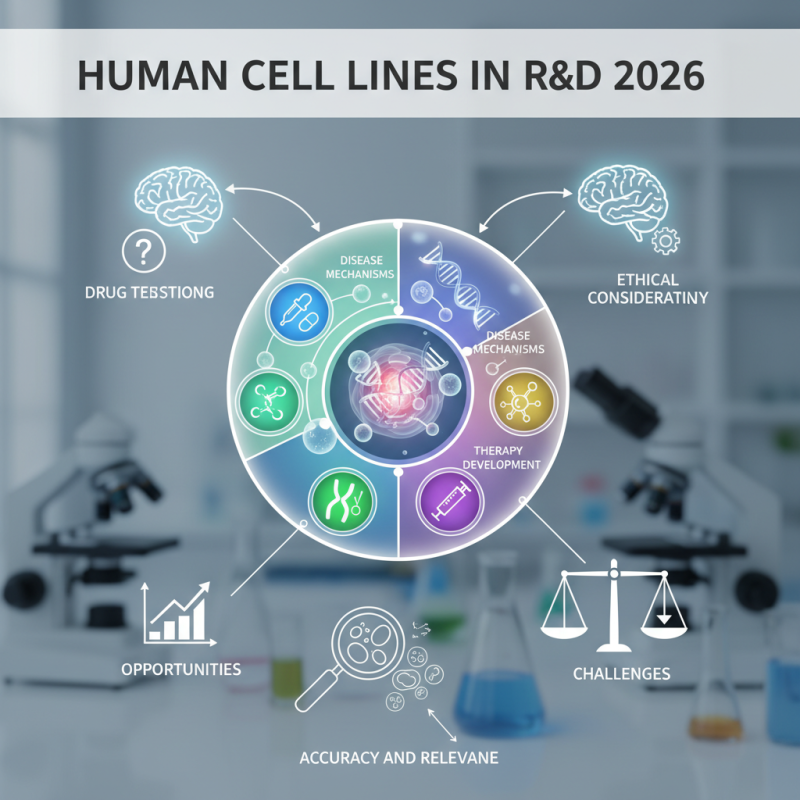
Human cell lines allow researchers to study complex cellular processes in a controlled environment. They provide a platform for testing drug responses and investigating genetic disorders. However, ethical considerations and the biological variability between cell lines pose challenges. Each line has its unique characteristics, which may not perfectly represent human physiology.
The reliance on human cell lines continues to evolve. While they present invaluable opportunities, there is also the need for critical reflection. As Dr. Simmons points out, ensuring accuracy and relevance in research is crucial. Scientists must carefully select cell lines that best mimic the disease context for effective research outcomes. Without this, findings might lead to false conclusions or ineffective treatments.
Understanding Human Cell Lines: Definition and Importance in Research
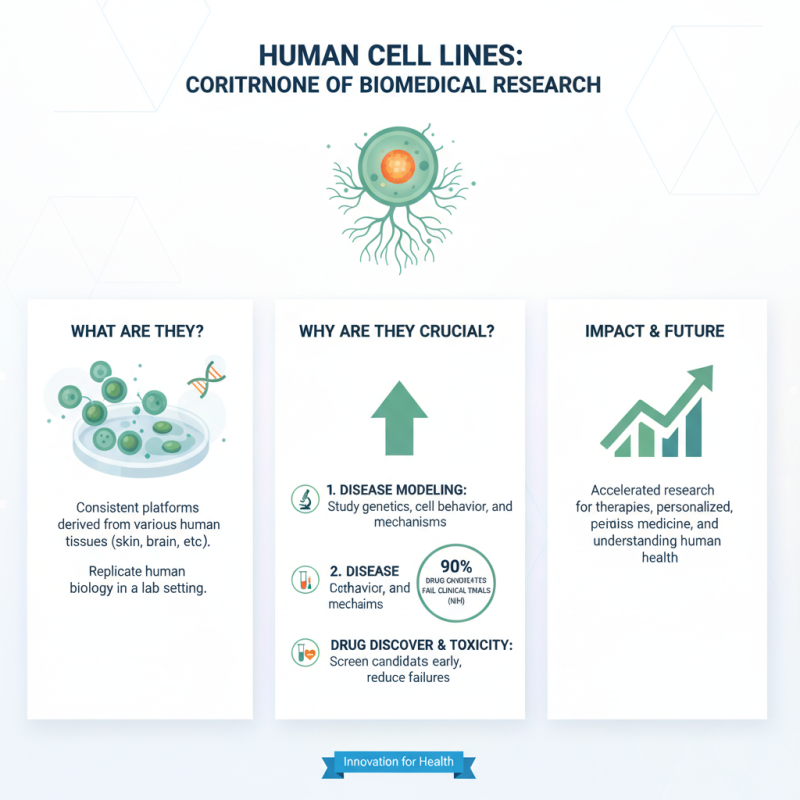
Human cell lines are crucial for research and development. They offer a consistent platform to study human biology. These cells can be derived from various tissues, providing a wealth of information for scientists. According to a report by the National Institutes of Health, nearly 90% of drug candidates fail in clinical trials. This highlights the importance of early-stage research using human cell lines to identify potential issues.
These cell lines allow researchers to study disease mechanisms, drug responses, and gene functions. In fact, a recent study published in Nature emphasized that using human cells increases the relevance of findings compared to animal models. Cell lines can be genetically modified, enabling scientists to investigate specific pathways in diseases like cancer. Yet, not all studies using cell lines yield reliable results. Issues like gene drift and contamination can lead to incorrect conclusions.
**Tip:** Always verify the source and integrity of cell lines.
Different types of human cell lines serve unique purposes. For example, HeLa cells are often used in cancer research, while induced pluripotent stem cells (iPSCs) allow for studies on regenerating tissues. However, researchers must remain cautious. The variations in response among different lines can complicate results.
**Tip:** Choose cell lines that closely mimic the specific condition being studied.
Types of Human Cell Lines: Origin and Specific Applications
Human cell lines are crucial in research and development. They come from various human tissues and serve unique purposes. For instance, lung cancer cell lines like A549 and H1299 help researchers study cancer biology and drug responses. These cell lines provide insights into cellular behavior in disease conditions.
Embryonic stem cells offer tremendous potential in regenerative medicine. Their ability to differentiate into different cell types aids in studying various diseases. A report by the International Stem Cell Research Society states that 40% of all stem cell research involves these lines. On the other hand, immortalized cell lines like HeLa are commonly used in vaccine development and gene editing.
**Tip:** Choose cell lines that closely resemble the target tissue for accurate results.
Using human cell lines requires careful consideration. Their genetic makeup may change over time, impacting research quality. Some researchers question the relevance of results obtained from these lines. Variability in responses among different labs adds to the complexity.
**Tip:** Regularly authenticate your cell lines to avoid issues in your research.
In summary, human cell lines are valuable tools but necessitate high standards of experimental practice. Engaging with these cell lines thoughtfully enhances scientific outcomes.
2026 How to Use Human Cell Lines in Research and Development? - Types of Human Cell Lines: Origin and Specific Applications
| Cell Line Name |
Origin |
Application |
Advantages |
Limitations |
| HeLa |
Cervical cancer |
Cancer research, vaccine development |
Highly proliferative, well-characterized |
Immortalized cells may not represent normal physiology |
| MCF-7 |
Breast cancer |
Hormone response studies |
Useful for drug testing |
May not fully mimic in vivo conditions |
| A549 |
Lung carcinoma |
Respiratory disease research |
Useful for studying lung function |
Limited genetic diversity |
| Jurkat |
T lymphocyte |
Immune response studies |
Relevant for immunology |
Not a primary cell line |
| HEK293 |
Human kidney |
Protein expression studies |
Easily transfected |
May not reflect native cellular environment |
Culturing Techniques: Best Practices for Maintaining Cell Lines
Maintaining human cell lines in research requires specific culturing techniques. Proper protocols ensure the health and longevity of cells. Start with a sterile environment. This minimizes contamination risks. Regularly check incubator temperatures. Deviations can harm cell growth.
Nutrient supply is crucial. Use appropriate culture media that support cell growth. Monitor pH levels regularly; fluctuations can lead to cell stress. Transferring cells at the right time is essential. Overconfluence can impair cell function.
It’s important to maintain a consistent passaging schedule. Delaying this can result in senescence or altered cell behavior. Make sure to document every step. Inconsistencies in methods often lead to reproducibility issues. Reflecting on these techniques can guide improvements in future experiments.
Cell Line Growth Comparison: Various Culturing Techniques
This chart illustrates the average growth rates of human cell lines under different culturing techniques, highlighting best practices for maintaining cell lines in research and development.
Ethical Considerations: Guidelines for Using Human Cell Lines
Using human cell lines in research requires strict ethical guidelines. The National Institutes of Health states that over 70% of researchers utilize these cell lines. However, many do not fully understand the ethical implications involved. Consent from donors must be prioritized, ensuring their autonomy and rights are respected. Though regulations exist, gaps remain in the enforcement of these principles.
Transparency is essential in research. Many studies highlight inconsistencies in reporting donor consent. A 2022 survey reported that 30% of researchers were unaware of the specific guidelines for human cell line use. This lack of knowledge can lead to ethical oversights. Researchers must be vigilant in tracking the origins of their cell lines. This includes understanding the source and purpose behind their use.
Failure to adhere to ethical guidelines can lead to significant consequences. Ongoing scrutiny is essential in promoting responsible research practices. As the field evolves, fostering a culture of ethical awareness is crucial. Researchers need to reflect on their methods and ensure that they align with established ethical frameworks. Engaging in discussions about these concerns can advance the integrity of research.
Future Directions: Innovations in Human Cell Line Research and Development
The future of human cell line research holds great promise. Innovations are emerging in techniques and technologies, allowing for advanced studies. Researchers can develop more accurate models of human diseases. This leads to better understanding and treatment options.
Tips: Always use well-characterized cell lines. Validate their genetic and phenotypic profiles. This helps ensure reproducibility in experiments.
Current trends include the use of organoids and 3D cultures. These models more closely mimic human tissues than traditional 2D cell lines. However, challenges remain. Researchers often face limitations in funding and resources.
Addressing these gaps is crucial for progress.
Consider collaborating with other labs. Share insights and findings. Such partnerships can enhance the quality of research. Stay updated with the latest publications and breakthroughs. This will inspire new ideas and methodologies. The journey is complex, yet rewarding.