ADME Tissues, Fractions and Enzymes

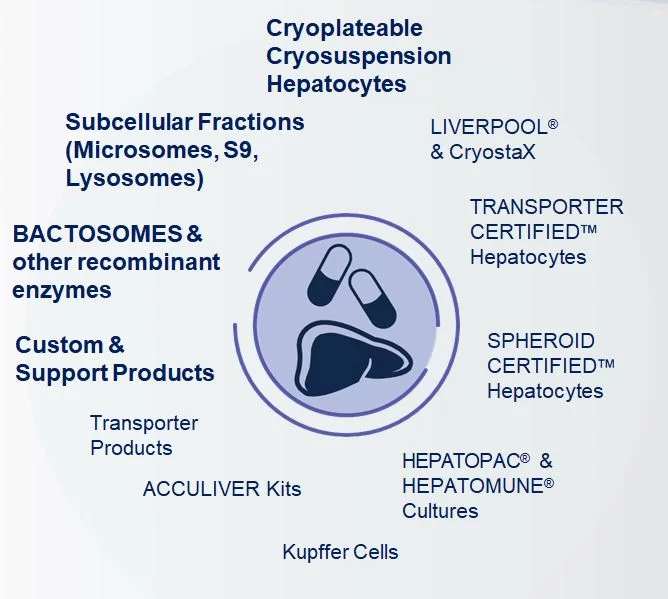
BioIVT is the leading portfolio of ADME products

circle-clipart

Stock Availability

Stock Availability in the Mumbai Warehouse
circle-clipart

Technologies

Our innovative technologies and team of experienced scientists offer novel methodologies for drug discovery.
circle-clipart

Quality

Our high-quality biospecimens come with an unconditional product guarantee.
BioIVT is the leading portfolio of ADME products

  • Large lot sizes
  • Extensive inventory
  • High viability and consistency
  • Proprietary technologies
  • Specialized test systems
  • Supply chain infrastructure

1 – Tissue Sub-Cellular Fractions:

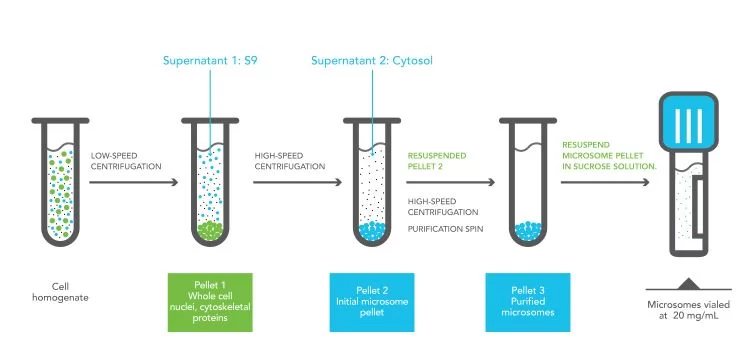
They are a non-living, in vitro matrix prepared from tissue homogenates/cellular lysates that have undergone various centrifugation steps to either enrich for or diminish specific enzymatic activities found in the original organs/tissue(s).

Vast majority of these are pooled from many different donors, however there are instances where subcellular fractions from individual donors are more advantageous

Standard Inventory Tissues: Liver, Intestine, Kidney, Lung, Skin

Unique preparation, cells are isolated in the presence of protease inhibitors prior to sub- cell fraction production

Subcellular Fractionation

BioIVT produces subcellular fractions through the process of subcellular fractionation, which is the separation of cellular components. The initial step starts with the homogenization of tissue in an isotonic buffer to aid in the separation of the cellular components.

Through differential centrifugation, BioIVT can isolate purified organelle fractions including

  • Homogenate
  • Microsomes
  • S9
  • Cytosol
  • Lysosomes
  • Mitochondria

Our standard products feature fully-characterized subcellular fractions from the following toxicologically-relevant species:

  • Human
  • MiniPig
  • Monkey
  • Rabbit
  • Dog
  • Guinea Pig
  • Rat
  • Hamster
  • Mouse

2 – Non-Traditional Sub-Cellular Fractions:

  • Liver Lysosomes
  • Liver Tritosomes
  • Liver Mitochondria

3 – Recombinant Enzymes for Drug Discovery & Preclinical Development:

Recombinant enzymes represent a useful test system for studies requiring high levels of catabolic activity and the simplest system available to study interactions between a drug candidate and individual enzymes. These recombinant enzymes can be used in many in vitro assays and are particularly useful in reaction phenotyping and enzyme inhibition preclinical studies.

  • Recombinant Cytochrome P450 Enzymes
  • Non-CYP Recombinant Enzymes

4 – Cryopreserved Hepatocytes:

Purified, frozen liver cells that can be thawed and cultured in a lab. Hepatocytes are the main structural and functional parenchymal cells of the liver.       They make up approx. 80% of the liver, but only 60% of the total liver cells. 
Hepatocytes express high levels of transporters and drug metabolizing enzymes (DMEs).

Select the Right Hepatocytes for Your Study

Which in vitro test system best suits my needs?

We offer a wide variety of hepatocyte test systems. We can provide immortalized or primary cells, fresh or cryopreserved, animal or human hepatocytes in the format of your choice. We have individual donor and pooled donors, suspension and plateable cells, and can even plate the hepatocytes for you.

  • Animal Cryoplateable
  • Human Cryoplateable
  • Animal Cryosuspension: CryostaX®
  • Human Cryosuspension: CryostaX®
  • Fresh Hepatocytes
  • Immortalized Hepatocytes

Use: Subcell and Recombinants vs Hepatocytes

Metabolic StabilityMetabolic Stability
Metabolite IdentificationMetabolite Identification
Reaction PhenotypingReaction Phenotyping
Enzyme InhibitionEnzyme Inhibition
Examine Gender InfluenceExamine Gender Influence
Examine Genetic InfluenceExamine Genetic Influence
Choosing Small Animal In Vivo ModelChoosing Small animal In Vivo Model
Ames Test/Genotox 

Need More Information?

The Krishgen support team strives to provide swift responses and resolution to your queries. Get in touch for a technical question, product query or quote request.